Exposure
The extent to which a task appears technically exposed to AI under the atlas framework.
Global Automation Atlas
Key Findings
The atlas measures country-conditioned task exposure to AI across countries, pathways, skills, and trade-facing technology channels.
This is descriptive evidence on task exposure. It does not measure realized adoption, job loss, wages, productivity, or causal labor-market effects.
What the atlas measures
Start with the object being measured, then move to interpretation.
The extent to which a task appears technically exposed to AI under the atlas framework.
Exposed tasks where AI appears more likely to replace the worker's direct activity.
Exposed tasks where AI appears more likely to support the worker rather than replace them.
The same standardized tasks are evaluated inside country-specific settings rather than under one universal context.
Important: exposure is not realized adoption, and substitution is not a direct measure of job loss.
Main findings
Finding 01
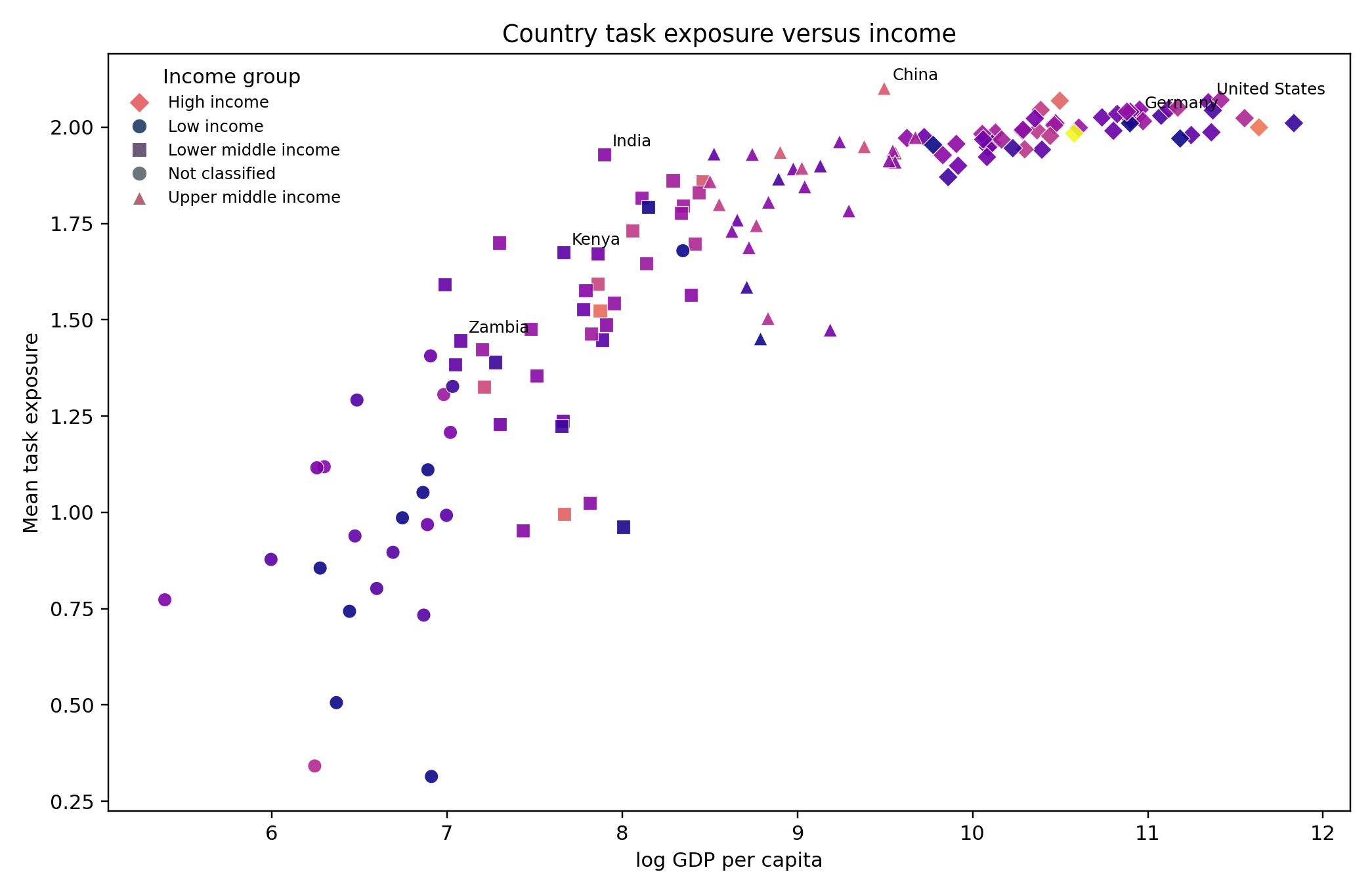
Higher-income countries often sit higher on the atlas measures, but the relationship is not mechanical. The public country panel shows a broad development gradient with substantial within-group variation still left to explain.
Open World View
Finding 02
Two countries can look similar in the aggregate and still differ sharply once exposed tasks are broken into substitution, augmentation, and direct-execution pathways. The atlas is useful because it shows that internal structure, not only rank order.
Read country profiles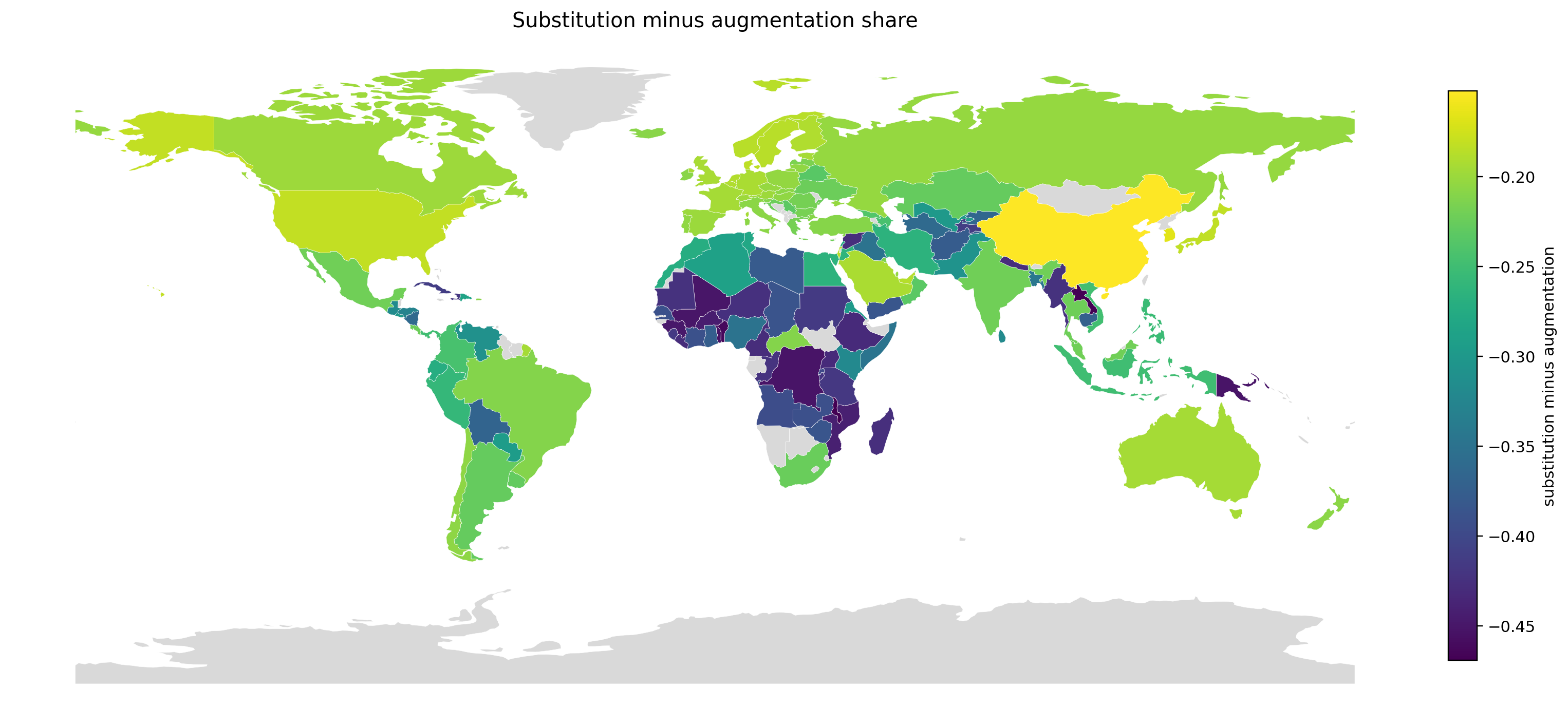
Finding 03
In many countries, exposed tasks still lean more toward AI supporting workers than replacing them outright. That is why the site separates pathway orientation from the overall level of exposure and keeps interpretation descriptive rather than alarmist.
Open Key country comparisons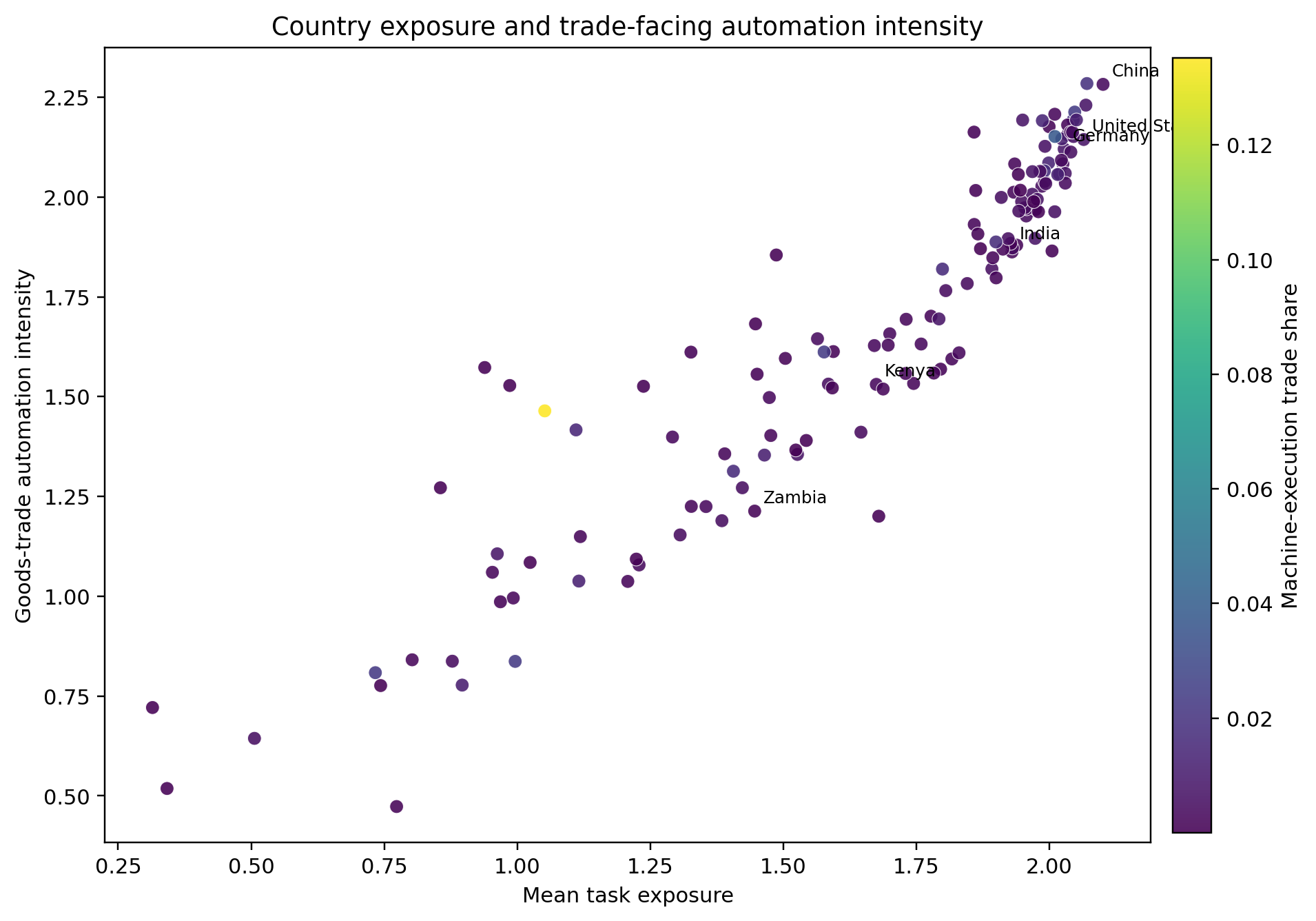
Finding 04
The goods-trade proxy does not measure realized adoption, but it does provide another way to track how automation technology reaches countries. It is most useful when read alongside the country-conditioned task layer, not as a replacement for it.
Open Products & TradeHow to use the site
Global patterns
Start here when you want the cross-country distribution first.
Open World ViewCountry detail
Use this when you want one country's occupations, industries, skills, and peer context.
Open CountriesTask-level lookup
Go here when you want to inspect one task directly rather than infer it from the aggregate.
Open Task FinderDownloads
Use the data page when you want the public bundles, codebook, and download-ready files.
Open DataGo deeper
The site is strongest when the findings page leads into the live atlas, the companion paper, and the downloadable release.